5 Signs Your Business Needs a Colocation Data Centre
5 Signs Your Business Needs a Colocation Data Centre
Key Takeaways
- Colocation data centres reduce capital and operational expenses by sharing infrastructure costs like power, cooling, and security.
- They offer dynamic scalability, allowing businesses to adjust resources as needed without significant investments.
- Colocation data centres guarantee high availability with redundant power, network connectivity, and cooling systems.
- They meet industry standards for security and regulatory compliance, safeguarding data from threats.
- By outsourcing infrastructure management, IT teams can focus on strategic projects that drive business growth.
Introduction
As digital transformation accelerates, businesses need to innovate faster, respond to market opportunities, and maintain a technological edge over competitors.
Unfortunately, many companies still face ongoing IT infrastructure challenges, such as rising operating, maintenance, and upgrade costs. To exacerbate these issues, they face challenges by dynamically expanding their IT infrastructure to meet business demands.
Fortunately, colocation data centres offer a viable solution. They’re reshaping the way businesses approach their IT infrastructures. They provide businesses with a dependable, shared, scalable infrastructure and regulatory compliance, allowing internal IT staff to concentrate on critical projects.
This article aims to illustrate how colocation data centres provide companies with a strategic advantage and demonstrate how they empower businesses to innovate faster and dynamically respond to market opportunities. So, without further ado, let’s get started!
What is a Colocation Data Centre?
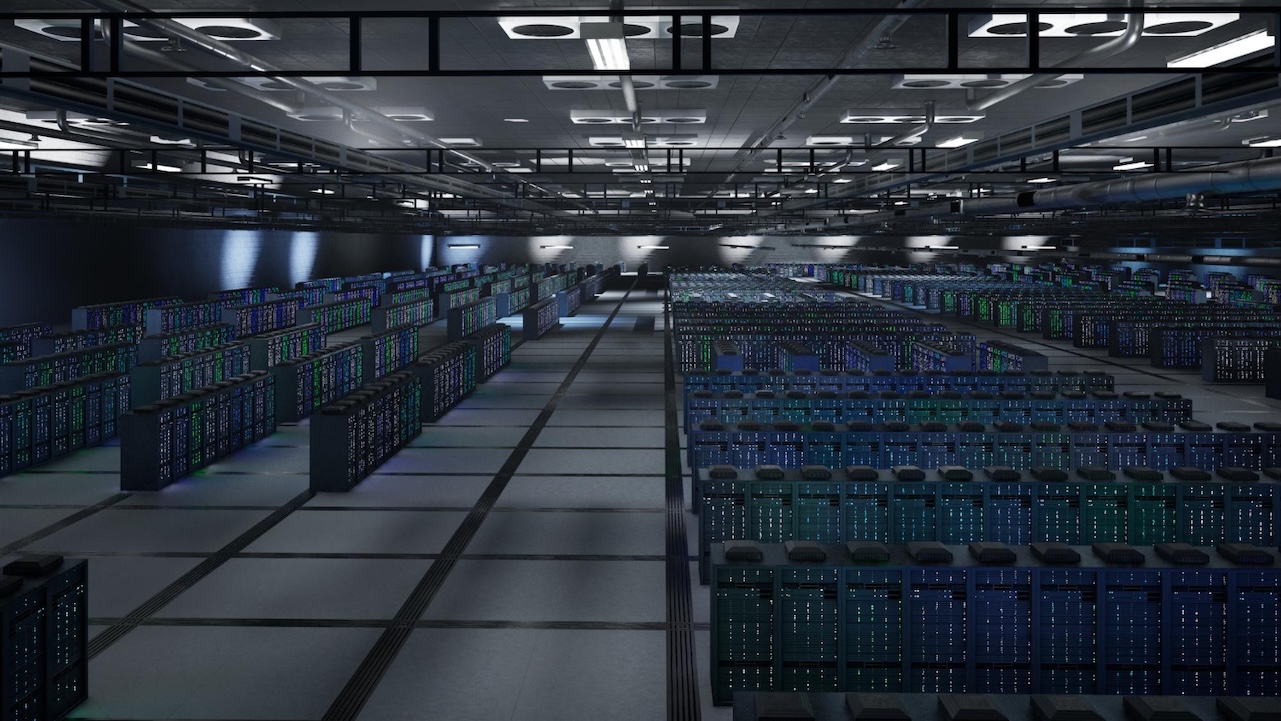
A colocation data centre is a third-party facility where businesses can rent space to house their IT infrastructure, rather than building and maintaining a private data centre.
In this shared environment, companies retain ownership and control over their hardware. However, the colocation provider supplies critical infrastructure such as power, cooling, physical security, and network connectivity.
Consequently, this arrangement allows organisations to benefit from enterprise-grade facilities and operational efficiencies. Thereby, ensuring high availability and reliability for their IT systems without significant capital and operational input.
Why is Colocation Data Centre Necessary for Businesses?
Colocation data centres offer businesses a dependable, scalable, and secure infrastructure that directly fosters innovation, growth, and resilience.
In practice, the flexibility to scale resources up or down as needed allows organisations to respond quickly to market changes, without the heavy capital investment of building their data centres.
Such operational efficiency enables companies to focus resources on innovation and core business initiatives. The colocation provider’s management of the complexities of IT infrastructure ultimately gives them a competitive edge.
1. Escalating IT Infrastructure Costs Are Straining Your Budget
Challenges: Maintaining an on-premise data centre is expensive. It dictates high upfront capital expenditures (CapEx) for hardware, power infrastructure, and real estate, combined with ongoing operational expenses (OpEx) like energy bills, cooling systems, and staffing.
Solution: Colocation services are the answer to this problem. You rent space at a shared, expert facility rather than buying and managing your own data centre. This arrangement shifts IT expenditure from CapEX, which is uncertain, to opEX, which is more predictable.
These infrastructural and cost benefits can be summarised as:
- Shared power, cooling, and network infrastructure that reduces overall costs.
- Lower energy bills due to optimised facility design.
- No need to budget for physical upgrades, generator backups, or HVAC maintenance.
2. Your Business Requires Enhanced Uptime and Reliability
Importance: In today’s digital era, modern businesses depend on always-on systems for business continuity. As such, downtime is costly—not only in terms of lost revenue, but reputation and customer trust.
Colocation advantage: Colocation data centres also guarantee high availability and reduce downtime, even during peak times or unforeseen disruptions. They achieve such reliability via:
- Redundant power supplies (UPS and generators).
- Multi-path network connectivity.
- Robust cooling systems and environmental controls.
3. Scaling Your IT Infrastructure is Becoming Challenging
Limitations: On-premise data centres often face challenges with limited space, power, and cooling capacity. This can make expansion both costly and sophisticated. As such, scaling up usually dictates substantial capital investment for new hardware and additional floor space. Furthermore, integrating new technologies and larger storage can risk downtime, especially when demand unpredictably peaks.
Flexibility: Colocation facilities are purpose-built for dynamic scalability and rapid adaptation to evolving business needs. In essence, they enable companies to dynamically scale up or down without having to make large infrastructure investments. As needed, organisations can increase bandwidth or add more racks.
Future-proofing: Unlike traditional on-premise setups, colocation facilities provide businesses with direct links to multiple cloud providers. This makes it easier for them to integrate emerging technologies such as AI and IoT into their operations. In essence, their interconnected infrastructure supports seamless digital transformation.
4. Security and Compliance Requirements are Increasing
Risks: As the threat landscape expands, insider threats, ransomware, and compliance audits are becoming more prevalent. Failure to meet expectations may result in legal repercussions or customer loss.
Colocation data centres, fortunately, offer viable solutions to today’s dynamic threat landscape. For instance:
- 24/7 surveillance, biometric access controls, and physical security
- Compliance with industry standards such as ISO 27001, PCI-DSS, SOC 2, and more
- Layered cybersecurity protocols and support for data sovereignty
They also follow best industry practices and deploy the latest security innovations, enabling companies to avoid the burden of overseeing security upgrades. As a result, companies have peace of mind since their infrastructure meets the strictest security and regulatory standards.
5. Your IT Team is Overwhelmed with Maintenance Tasks
Burden: Rather than troubleshooting power problems or replacing failing disks, IT professionals should be concentrating on strategy and innovation. However, on-premise administration frequently results in inefficiencies and stress.
Support: Co-location companies usually provide full-stack support, remote hands, and monitoring. Some even offer managed services like hardware replacement, backups, and patching.
Efficiency: Now that the heavy lifting has been delegated, your IT staff can concentrate more quickly on initiatives. For example, tasks that increase revenue, improve customer experiences, and spur innovation.

Colocation Data Centre vs. Cloud
The most significant differences between colocation data centres and cloud services lie in control, customisation, and cost.
Businesses that leverage colocation have complete control over their software and hardware setups. This consequently enables them to tailor their stacks to satisfy their particular needs.
Cloud services, on the other hand, are fully managed by the provider, who also provides virtualised resources that may be made available as needed. This permits quick deployment and scaling for varying workloads, but it restricts hardware-level customisation.
Significant differences in cost structures also exist. Co-location usually entails larger initial gear purchases as well as continuing maintenance, power, and space rental expenses.
Conversely, cloud services use a pay-as-you-go model, charging only for the resources used. This can make them more affordable for sporadic or changeable demands. However, it may result in higher long-term costs for regular use.
Colocation Data Centre vs. Hyperscale
Scalability and resource allocation are two key areas where colocation data centres and hyperscale facilities diverge. Colocation centres are perfect for small and medium-sized firms or enterprises seeking controlled, economical expansion.
This is because they are constructed to let businesses rent only the space and resources they require, allowing for flexible, incremental growth. However, scalability is inherently limited by the physical capacity of the facility. Additionally, expansion often requires migrating to a larger centre as needs evolve.
Hyperscale data centres, on the other hand, are designed for quick, nearly infinite scaling.
In fact, these facilities support hundreds of thousands of servers and massive amounts of data for global tech giants and cloud service providers.
They can effectively handle unexpected surges in demand and support modern technologies like artificial intelligence and big data analytics. Hyperscale environments are the go-to option for businesses with massive, dynamic workloads and a global presence.
Colocation Data Centre Services in Malaysia
Embracing colocation enables businesses to focus on their core competencies while leveraging top-tier enterprise-level IT infrastructure. However, without the right partner, one can miss the full benefits of colocation data centers.
AIMS Data Centre is a renowned provider of dependable, secure, and scalable infrastructure solutions suited to a range of business requirements. As a leading data centre colocation provider in Malaysia, we provide multiple strategically located data centres in Kuala Lumpur and parts of Southeast Asia.
In fact, our robust ecosystem supports seamless interconnectivity across the region. Furthermore, our carrier-neutral approach allows customers to choose from various domestic and international carriers, guaranteeing fast network performance, low latency, and cost-efficiency.
AIMS also guarantees “zero downtime” with full infrastructure warranties and multi-layered security measures. Thus, ensuring dependable data safety and compliance with the highest industry standards.
With nearly 30 years of industry experience, our facilities are powered by energy-efficient technologies, utilising renewable hydroelectric power to offset energy demand. This exemplifies our dedication to sustainability.
As a trusted partner, AIMS empowers businesses to scale their IT infrastructure whilst fostering innovation and maintaining operational continuity.
Conclusion
In industries where speed and uptime are crucial to success, colocation data centres offer a strategic advantage. By renting space in shared, enterprise-grade facilities, companies gain access to advanced power, cooling, and connectivity resources without significant capital outlays.
As a result, companies can dynamically scale resources up or down as needed. Thereby, facilitating faster, more dependable digital experiences.
In fact, colocation data centres are helping modern businesses achieve previously unheard-of levels of innovation and operational agility. They enable companies to swiftly implement new technologies and handle complex tasks related to big data and artificial intelligence.
By moving to colocation, organisations also free up their internal IT teams to focus on more strategic initiatives. Additionally, the geographic distribution of colocation facilities allows companies to position their services closer to end-users. Thus, reducing latency and meeting regional compliance requirements.