Data Centre ESG Compliance: Meeting Carbon Emission Requirements and Energy Mandates
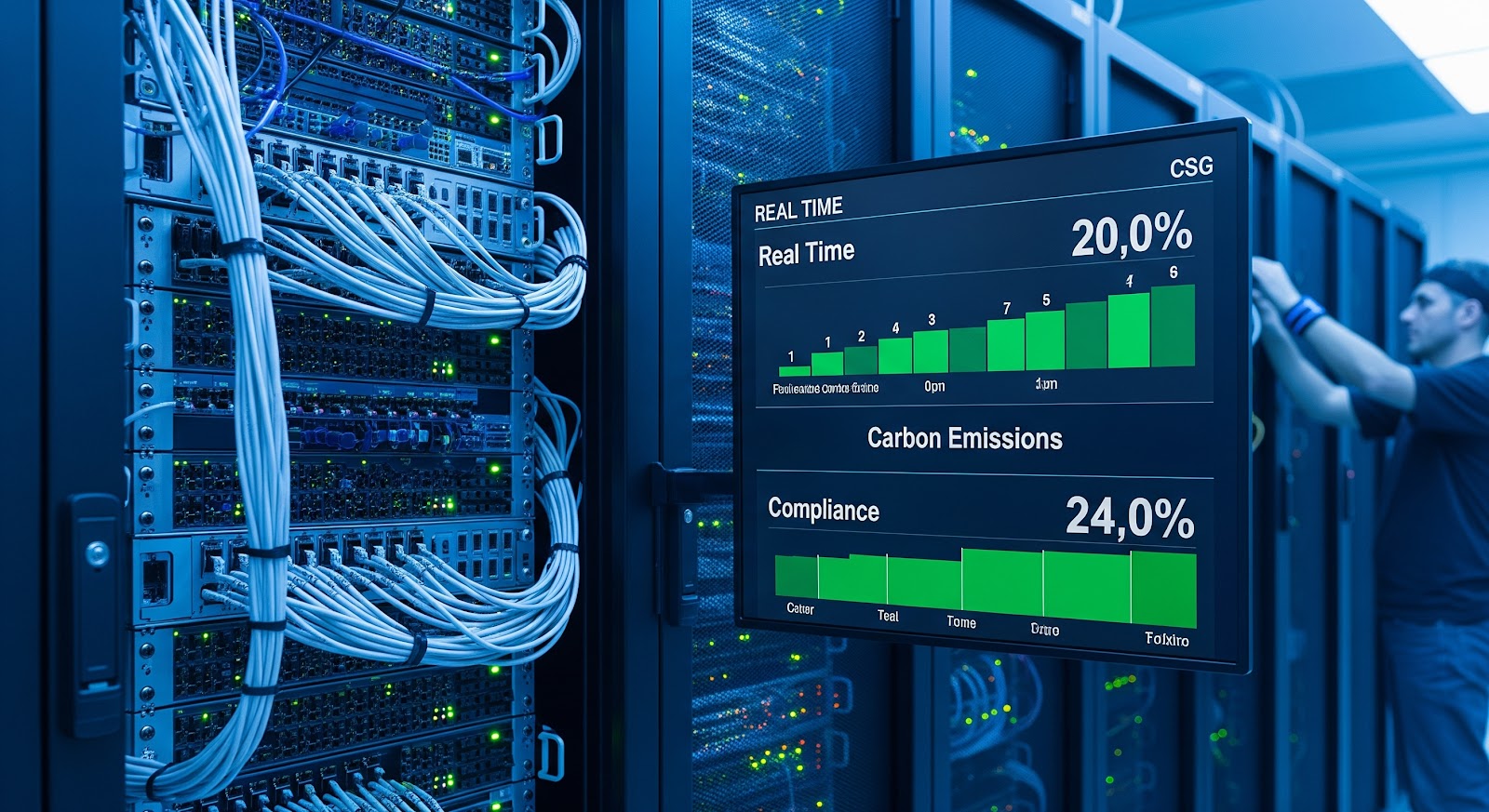
Data Centre ESG Compliance: Meeting Carbon Emission Requirements and Energy Mandates
Key Takeaways:
- ESG compliance for data centres focuses heavily on energy reporting, emission reduction, and transparent sustainability disclosures.
- New tariff structures may raise power costs by up to 20%, increasing pressure to adopt energy-efficient infrastructure.
- Affordable tools like RECs (RM80–100/month) and BCX carbon credits help businesses offset emissions without large upfront investments.
- AIMS’s green rack solutions, efficient cooling systems, and renewable energy partnerships lower operational footprint while ensuring uptime.
- Renewable energy initiatives—such as AIMS/Tenaga/TIME’s community solar project—support scalable clean energy adoption.
- A phased ESG roadmap (0–36 months) helps Malaysian enterprises meet disclosure, efficiency, and net-zero requirements systematically.
- With the right mix of RECs, offsets, and energy-efficient hosting, ESG compliance can be achieved affordably, credibly, and without operational disruption.
Introduction
As Malaysia intensifies its focus on sustainability via stricter carbon reduction policies, data centres have come under heightened scrutiny. These facilities keep the internet alive, but also consume enormous amounts of electricity. As such, their environmental impact is a critical concern for regulators and stakeholders.
Data centres must not only monitor and reduce their carbon footprint but also provide verifiable evidence of their ESG performance. This creates a challenging environment for enterprises. Balancing operational demands with sustainability goals dictates careful planning and investment.
Yet, many businesses see sustainability as a maze of costs and paperwork. They want to act responsibly but struggle to see where to start—or what it will really cost.
This article breaks down what ESG compliance actually means for Malaysian data centres. It also explores how new carbon mandates affect them, and why affordable options like AIMS Data Centre’s green rack solutions and renewable energy certificates (RECs) make sustainability both practical and budget-friendly.
What Does ESG Compliance Mean for Data Centres?
At its core, ESG compliance simply means operating a business in a way that respects three elements: the environment, people, and sound governance.
For data centres, the focus primarily leans heavily on the environment. These facilities run 24/7, draw high energy loads, and produce substantial heat. Left unchecked, that energy use translates directly into harmful carbon emissions.
As such, compliance with ESG standards requires data centre organisations to actively monitor and report their sustainability performance. This consequently fosters trust among stakeholders, investors, and regulators. In tandem, it also positions them as responsible contributors to Malaysia’s sustainable economic future.
In fact, Malaysia’s ESG reporting framework currently encompasses energy performance metrics for high-consumption facilities like data centres. This reflects the government’s tightening of sustainability policies.
Beyond reducing carbon footprint, the framework dictates that data centres transparently disclose their environmental impact, facilitating national climate goals and investor confidence.
Why Are New Energy Mandates and Carbon Regulations Impacting Data Centres?
Malaysia’s Net Zero 2050 target changed the equation for everyone—public agencies, corporations, and especially heavy energy users. The message is clear: emissions must go down, and reporting must get more transparent.
Furthermore, the country adjusted its electricity tariffs under a new structure effective July 1, 2025. This adjustment solidified its ambitious National Energy Transition Roadmap (NETR) with key carbon emission reduction goals.
A notable outcome is that large data centres can no longer rely on cheap, high-volume energy contracts. In essence, they may see power costs increase by up to 20%. The adjustment’s fundamental premise is to encourage energy conservation and efficiency.
As part of this push, Malaysia is also enforcing mandatory ESG reporting and energy efficiency programs for major electricity consumers. In practice, this means data centres must report their energy usage, emissions data, and sustainability efforts.
Bursa Carbon Exchange (BCX), Malaysia’s voluntary carbon market, can help with these regulatory obligations and adjustments. It allows companies to buy verified carbon credits to balance their unavoidable emissions. It’s not a loophole—it’s a transition tool that lets industries compensate responsibly while working toward cleaner infrastructure.
What Are the Biggest Challenges Enterprises Face in ESG Compliance?
Despite ESG’s growing importance under Malaysia’s sustainability agenda, many businesses still face ESG compliance challenges, such as:
- Regulatory complexity: ESG disclosure rules shift fast, and benchmarks often lack clarity, making compliance difficult to navigate effectively.
- Cost anxiety: Many businesses fear that implementing sustainability measures dictates multimillion-ringgit investments, which may strain budgets.
- Operational constraints: Energy upgrades can seem risky when uptime is everything. As such, enterprises fear potential downtime and disruptions during infrastructure upgrades.
- Stakeholder expectations: Investors and clients want green certification — with proof, not promises. This adds pressure on enterprises to meet these standards.
- Fragmented regulations: Differences in state-level policies and oversight create inconsistent enforcement and compliance hurdles.
- Technological integration: Adopting energy-efficient and renewable technologies while maintaining performance has no baseline or standardised playbook.
How Can Data Centres Reduce Carbon Emissions Effectively?
Data centres can effectively reduce carbon emissions by adopting a multifaceted approach. This approach should be ideally focused on renewable energy integration, renewable energy certificates (RECs), and energy-efficient infrastructure.
Let’s break down what this would entail to reduce their environmental impact whilst also meeting increasingly stringent ESG compliance requirements.
Through Renewable Energy Integration
Data centres can partially substitute conventional power sources with solar or hybrid energy systems. A pioneering example is the collaboration between TIME dotCom, Tenaga Energy and AIMS to roll out Malaysia’s first community solar initiative for data centres.
This groundbreaking initiative aims to power both business operations and local community grids. Thus, showcasing how renewable energy can be deployed at scale for shared benefit.
Through Renewable Energy Certificates (RECs)
Without spending more than RM100 a month on physical infrastructure modifications, renewable energy certificates for data centres enable businesses to accomplish sustainability targets.
In practice, RECs offer an affordable path to ESG compliance by demonstrating that a company’s energy usage is balanced by renewable energy generated elsewhere.
AIMS supports carbon neutrality by purchasing carbon credits from the Bursa Carbon Exchange to offset residual emissions. Thereby, ensuring verified and traceable environmental impact reduction.
Through Energy-Efficient Infrastructure
Deploying green rack solutions, optimised cooling systems, and improving Power Usage Effectiveness (PUE) can appreciably cut the overall energy demand of data centres.
Efficient cooling is particularly mission-critical in tropical climates like Malaysia. This can be achieved by liquid cooling, AI-powered smart cooling, and facade designs that minimise heat transfer to lower energy consumption.
Collectively, these strategies help with ESG compliance certification while maintaining high performance and operational resilience.
How Much Does ESG Compliance Really Cost?
ESG compliance costs vary significantly depending on one’s chosen approach and scale of implementation. As such, data centre operators can tailor their ESG strategies based on one’s budget, operational scale, and compliance goals. Here’s a cost-comparison table to illustrate contrasting options.
| Compliance Option | Initial Cost | Monthly Cost | ESG Impact | Best For |
|---|---|---|---|---|
| Full on-site renewable setup | RM 50,000+ | RM 2,000+ | Long-term emission reduction | Large corporations |
| Carbon credit offsets (BCX) | — | RM 80–100 | Verified carbon neutrality | All enterprises |
| Renewable Energy Certificates (RECs) | — | RM 80–100 | Renewable energy compliance | SMEs and enterprises |
| Green rack data centre colocation | — | RM 200–500 | Energy-efficient, ESG-ready hosting | Data-driven businesses |
Key takeaway: Data centre ESG compliance can be achieved for under RM100/month when using RECs and carbon offsets — while still delivering measurable impact.
What Are the Compliance Timelines and Roadmap for Malaysian Businesses?
Malaysia’s ESG compliance framework follows a structured roadmap. This roadmap is designed to progressively facilitate sustainability integration, capacity, and transparency among businesses over the coming three years.
This phased approach that entails maintaining an ESG compliance checklist ensures manageable implementation that aligns with Bursa Malaysia’s disclosure requirements. Thereby, enhancing both accountability and investor confidence.
Here is a rough roadmap to help Malaysian businesses systematically meet escalating ESG standards while aligning with national net-zero ambitions by 2050.
Short-Term (0–6 months)
Businesses should start by conducting extensive ESG and energy audits to identify gaps and opportunities. Simultaneously, enrolling in REC or carbon credit offset programs offers an accessible way to show early commitment.
Organisations must also commence ESG reporting aligned with Bursa Malaysia’s disclosure templates introduced under the National Sustainability Reporting Framework (NSRF).
Mid-Term (6–18 months)
Between 6-18 months, the focus should shift to operational improvements. For example, companies can implement energy-efficient infrastructure such as green rack systems. They can also perform upgrades that boost energy performance.
Additionally, integrating renewable energy sources or scaling REC-backed offsets should become standard practice within operations.
Long-Term (18–36 months)
During this period, enterprises are encouraged to move toward net-zero operations through continuous carbon credit participation. This might entail continuously participating in carbon credit markets like Bursa Carbon Exchange for verified offsets.
Besides engaging in ESG compliance monitoring, this period might also dictate publishing annual ESG impact reports for transparency, stakeholder trust, and long-term sustainability.
How Is AIMS Enabling Affordable ESG Compliance for Businesses?
AIMS is playing a crucial role in enabling affordable and effective ESG compliance for businesses in Malaysia via multiple strategic solutions. In fact, AIMS’s strategy could be described as pragmatic sustainability—start where impact is easiest, then scale. Here are some of its affordable ESG-compliant solutions:
- Green Rack Solutions: Pre-engineered for efficiency and sustainability reporting.
- Renewable Energy Certificates: Subscription-based, simple, and verifiable.
- Carbon Credits via BCX: Offsets backed by Malaysia’s official carbon market.
- Solar Partnerships: Collaboration with Time Energy, and Tenaga expands access to shared community solar.
Overall, this combination of innovative offerings and collaborations makes AIMS a leader in practical, budget-friendly ESG compliance for data centres.
How Can Enterprises Get Started With ESG Compliance Today?

Getting started is simpler than many think. Most companies already have the data they need — it’s just scattered. Here are some steps that make compliance accessible:
- Evaluate current energy consumption and carbon footprint to understand key impact areas. This establishes a baseline to guide targeted improvements.
- Select your compliance approach — choose between RECs, offsets, or green rack upgrades.
- Partner with an ESG-ready data centre like AIMS for infrastructure and certification support.
- Report achievements in your annual ESG submission for investors and regulators to maintain transparency.
The biggest mistake is waiting until regulations make reporting mandatory. Starting early builds trust and gives room to adjust before penalties or audits arrive.
Conclusion
Can ESG Compliance Be Affordable and Impactful? Absolutely. Sustainability isn’t always a grand overhaul. In fact, it doesn’t need to be complex or costly. Often, it’s a set of quiet, measurable steps that trim waste and show responsibility.
With renewable energy certificates, carbon-credit offsets, and smarter infrastructure, Malaysian data centres can comply, compete, and contribute — all without blowing the budget. In practice, ESG compliance can cost less than RM100 per month — while significantly improving reputation and regulatory standing.
Through green rack solutions, BCX-certified offsets, and community solar partnerships, AIMS Data Centre empowers Malaysian enterprises to meet ESG goals efficiently, credibly, and affordably.
So, take your first step toward ESG compliance today—explore AIMS’s sustainability initiatives and cost-effective carbon solutions.